Stockpile Volume Mapping Camp Verde Materials Yard July 2026
By FlagAerial Mapping – Northern Arizona’s NDAA‑Compliant Drone Surveying Team

On July 24th, FlagAerial completed a full stockpile volume survey at the Camp Verde materials yard, delivering accurate measurements for sand, chips, RAP, DCF, 3/4", 3/8", and multiple aggregate blends. This yard required precise inventory counts to support ordering decisions, production planning, and material verification — and drone volumetrics provided the clarity needed.
Our NDAA‑compliant drone system captured high‑resolution imagery across the entire site, producing a detailed 3D model and exact pile volumes the same day. Every pile was outlined, measured, and verified using industry‑standard volumetric processing.
📍 What We Mapped

- Prescott Washed Sand
- PHX DCF
- Yava Washed Sand
- 3/4" Aggregate
- Yava 57
- Prescott 3/4"
- High Volume Chips
- ERC CF
- Prescott DCF
- Yavapai DCF
- Yavapai 3/8"
- Marietta 3/8"
- PV 1/2"
- 75th 1/2"
- RAP Near Plant
- Low Volume
- High Volume
- RAP
- Concrete Sand
- Cemex 3/4"
Each pile was measured in cubic feet and converted to tons using material‑specific unit weights, giving the yard a complete inventory snapshot.
📊 Why Drone Volumetrics Matter
📊 Why Drone Volumetrics Matter

Accurate stockpile volumes help contractors:
- Avoid over‑ordering
- Prevent shortages
- Verify supplier quantities
- Track monthly inventory
- Improve production planning
- Reduce financial waste Traditional ground measurements are slow and inconsistent. Drone mapping delivers fast, repeatable, and highly accurate results — especially for irregular piles, steep faces, and large yards.
📍 Serving Northern Arizona
📍 Serving Northern Arizona
📊 Why Drone Volumetrics Matter

FlagAerial provides stockpile volume mapping for:
- Materials yards
- Asphalt plants
- Sand & gravel pits
- Construction sites
- Recycling yards
- RAP piles
- Aggregate suppliers
From Flagstaff to Camp Verde, Prescott, Cottonwood, Williams, Holbrook, Winslow, and beyond — we deliver accurate volumes anywhere in Northern Arizona.
📞 Need Your Yard Mapped?
📍 Serving Northern Arizona
📞 Need Your Yard Mapped?

If you run a materials yard or construction site, FlagAerial can fly your piles and deliver full volume reports same‑day.
Fast flights. Clean reports. No guessing. Visit FlagAerial.com to schedule your next yard.

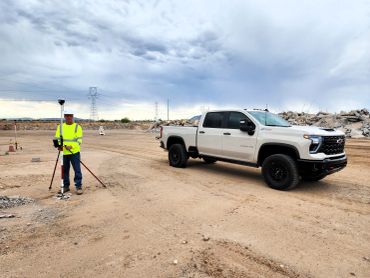
Why the RX2 Changes Drone Mapping Accuracy in Arizona

FlagAerial isn’t your average drone company — and our new RX2 rover proves it.
Across Northern Arizona, contractors and engineering teams rely on accurate site data to make real decisions. Whether it’s topo, tree locating, stockpile volumes, or construction progress, the quality of the data matters. That’s why we added the Emlid RX2 to our workflow — and it’s already changing the level of accuracy we deliver.
Why GNSS Matters More Than Most People Realize
Most drone companies rely only on the drone’s GPS. It’s fast, easy, and good enough for photos — but not for engineering. Drone GPS can drift several feet, especially in NAZ terrain. That’s why we use survey‑grade GNSS control on every mapping project.
The RX2 gives us:
- centimeter‑level accuracy
- reliable control points
- clean surfaces
- tighter contours
- repeatable results
This is the difference between “a map” and data you can actually build from.
Straight vs. Tilted Measurements — Why It Matters
The RX2 allows us to collect:
- straight‑up measurements for maximum vertical accuracy
- tilted measurements for hard‑to‑reach tree locations, corners, and features
This flexibility is huge for tree locate projects, where canopy, shade, and uneven terrain make traditional shots difficult. With the RX2, we can confidently mark trees, utilities, and site features with accuracy that drops straight into CAD.
Real Example: 5‑Acre Topo & Tree Locate — Williams, AZ
Last week we completed a 5‑acre topo and tree locate project in Williams. Using low‑altitude drone mapping and RX2 ground control, we delivered:
- clean contours
- accurate tree positions
- tight surfaces
- fast turnaround
- data ready for engineering teams
This is exactly why we upgraded our workflow — Northern Arizona projects deserve accuracy, not guesswork.
Why FlagAerial Stands Out
Most drone companies focus on photos. FlagAerial focuses on accuracy, repeatability, and deliverables that integrate cleanly into CAD.
Our workflow:
- low‑altitude flights
- high‑overlap mapping
- RX2 GNSS control
- clean processing
- fast delivery
This combination gives contractors and engineers the confidence they need to move projects forward.
Supporting NAZ Contractors, Engineers, and Land Development
From topo to tree locating, construction mapping to progress flights, FlagAerial is committed to delivering data that actually matters. The RX2 is a major step forward — and we’re already seeing the difference on every project.
If your team needs reliable site data across Northern Arizona, we’re ready.
⭐ Documenting 100,000+ Cubic Yards of Recycled Concrete in Phoenix



.JPG/:/rs=w:370,cg:true,m)

What We do

Volumetric Surveys That Actually Mean Something
Stockpile numbers matter — for billing, inventory, and end‑of‑month reporting. Here’s a real example from one of our aggregate yards, where we utilize drone mapping for accurate data collection.
Volumetric Inventory – Multi‑Pile Yard
We deliver cut/fill, volume diff, and clean outlines so you know exactly what’s on the ground, including detailed tree counts which can also assist in wildfire mitigation efforts.

High‑Accuracy Measurements for Big Material Moves
Large piles? No problem. Drone mapping allows for accurate 3D models that traditional methods simply can't match. This high-quality data is essential for maintaining clean books and streamlined operations, and it's invaluable for applications like tree counts and wildfire mitigation.
Roadway & Infrastructure Mapping
Progress Documentation for City & Commercial Projects
Drone mapping isn’t just for dirt and rock. Cities and contractors use it for intersections, roundabouts, utilities, and as-builts, including tree counts for better planning and wildfire mitigation efforts.
Roundabout Infrastructure Survey – Flagstaff
Clean aerials help engineers, inspectors, and project managers stay aligned.
Progress Documentation for City & Commercial Projects
Progress Documentation for City & Commercial Projects
Weekly or monthly drone mapping flights provide you with a clear visual timeline of your project — eliminating guesswork and outdated photos. This method is also ideal for tree counts and wildfire mitigation efforts, ensuring accurate reporting and effective communication while keeping everyone accountable.
Acara Mendatang
Ikuti acara-acara mendatang kami, mulai dari kumpul-kumpul komunitas hingga penjualan khusus. Kami tidak sabar untuk bertemu Anda di sana.
Sunday Supper Club
Setiap Minggu
Evenings in the Park
Jumat Pertama Setiap Bulan
Morning Brews & Views
Setiap Sabtu

Aerial Progress Update: Kinsey School Rebuild in Flagstaff
Secure Drone Mapping in Northern Arizona
Why Contractors Use Aerial Progress Flights
Secure Drone Mapping in Northern Arizona

Back in January, I flew the first aerial survey of the new Kinsey School here in Flagstaff. At that point, the site was just breaking ground — early grading, utilities starting, and the first signs of layout work taking shape. Fast-forward to this past Friday, and the progress is unreal.
FlagAerial returned to the site for a second round of high-resolution aerial mapping using drone mapping technology and progress documentation. This allowed the project team to get a clean, accurate look at how far the job has moved in just a few months, including essential tree counts for future wildfire mitigation efforts.
From Dirt Work to Defined Foundation
Why Contractors Use Aerial Progress Flights
Secure Drone Mapping in Northern Arizona
January’s flight captured the early stages: Rough grading, initial cut/fill work, utility trenching, and early site prep, all of which can be enhanced through drone mapping for more accurate assessments. Friday’s flight shows a completely different picture: foundations forming, utilities further along, a clearly defined site layout, and heavy equipment moving fast. The entire footprint is taking shape, including tree counts for effective wildfire mitigation planning. Side-by-side, the transformation is obvious — and that’s exactly why progress flights matter.
Why Contractors Use Aerial Progress Flights
Why Contractors Use Aerial Progress Flights
Local, NDAA‑Compliant, and Built for Northern Arizona
Flagstaff projects move quickly, and the Kinsey School rebuild is no exception. Aerial documentation through drone mapping provides contractors and project managers with: A clear record of site development, visual proof of progress for clients and stakeholders, accurate, high-level views you can’t get from the ground, clean images for reporting, scheduling, and communication, and a consistent timeline of the job from start to finish. Whether it’s a school, commercial pad, subdivision, or utility project, aerial updates, including tree counts for wildfire mitigation, keep everyone aligned.
Local, NDAA‑Compliant, and Built for Northern Arizona
Local, NDAA‑Compliant, and Built for Northern Arizona
FlagAerial is fully NDAA-compliant, ensuring that our drone mapping services are approved for school districts, public agencies, and government-related projects throughout Northern Arizona. There are no restricted hardware issues and no compliance concerns—just clean, accurate aerial data, including tree counts and insights for wildfire mitigation.
Being based in Flagstaff allows us to provide fast turnaround times and simple communication.
What’s Next for the Kinsey School Site
FlagAerial will continue flying the Kinsey School as it progresses through major milestones, utilizing drone mapping to document each phase. Each flight adds another layer to the project’s story — from foundation to framing to finish. This advanced technology also allows for accurate tree counts, which are essential for future wildfire mitigation efforts. Contractors receive the documentation they need, the district gets a clear record of progress, and Flagstaff enjoys watching a new school take shape from the air.
📌 Final Takeaway

The Kinsey School rebuild is progressing rapidly, and aerial progress flights are the best way to capture the story from start to finish. FlagAerial is proud to support local construction with accurate drone mapping, tree counts, and NDAA-compliant site documentation across Northern Arizona, which also aids in wildfire mitigation. If your project requires monthly or milestone flights, FlagAerial is ready to fly.
FlagAerial Is Now Fully NDAA‑Compliant

Secure Drone Mapping in Northern Arizona
Back in January, I flew the first aerial survey of the new Kinsey School here in Flagstaff. At that point, the site was just breaking ground — early grading, utilities starting, and the first signs of layout work taking shape. Fast-forward to this past Friday, and the progress is unreal.
FlagAerial returned to the site for a second round of high-resolution aerial mapping using drone mapping technology and progress documentation. This allowed the project team to get a clean, accurate look at how far the job has moved in just a few months, including essential tree counts for future wildfire mitigation efforts.
Why NDAA Compliance Matters
January’s flight captured the early stages: Rough grading, initial cut/fill work, utility trenching, and early site prep, all of which can be enhanced through drone mapping for more accurate assessments. Friday’s flight shows a completely different picture: foundations forming, utilities further along, a clearly defined site layout, and heavy equipment moving fast. The entire footprint is taking shape, including tree counts for effective wildfire mitigation planning. Side-by-side, the transformation is obvious — and that’s exactly why progress flights matter.
What This Means for Northern Arizona
Flagstaff projects move quickly, and the Kinsey School rebuild is no exception. Aerial documentation through drone mapping provides contractors and project managers with: A clear record of site development, visual proof of progress for clients and stakeholders, accurate, high-level views you can’t get from the ground, clean images for reporting, scheduling, and communication, and a consistent timeline of the job from start to finish. Whether it’s a school, commercial pad, subdivision, or utility project, aerial updates, including tree counts for wildfire mitigation, keep everyone aligned.
NDAA‑Compliant Services Now Available
FlagAerial is fully NDAA-compliant, ensuring that our drone mapping services are approved for school districts, public agencies, and government-related projects throughout Northern Arizona. There are no restricted hardware issues and no compliance concerns—just clean, accurate aerial data, including tree counts and insights for wildfire mitigation.
Being based in Flagstaff allows us to provide fast turnaround times and simple communication.
Who Should Use NDAA‑Compliant Drone Mapping
FlagAerial will continue flying the Kinsey School rebuild as it progresses through major milestones, utilizing drone mapping to document each phase. Each flight adds another layer to the project’s story — from foundation to framing to finish. This advanced technology also allows for accurate tree counts, which are essential for future wildfire mitigation efforts. Contractors receive the documentation they need, the district gets a clear record of progress, and Flagstaff enjoys watching a new school take shape from the air.
Now Scheduling NDAA‑Required Projects
The Kinsey School rebuild is progressing rapidly, and aerial progress flights are the best way to capture the story from start to finish. FlagAerial is proud to support local construction with accurate drone mapping, tree counts, and NDAA-compliant site documentation across Northern Arizona, which also aids in wildfire mitigation. If your project requires monthly or milestone flights, FlagAerial is ready to fly.
Expert Surveying Services
1st Flight
3 Months Later
3 Months Later

Back in January, I flew the first aerial survey of the new Kinsey School here in Flagstaff. At that point, the site was just breaking ground — early grading, utilities starting, and the first signs of layout work taking shape. Fast-forward to this past Friday, and the progress is unreal.
FlagAerial returned to the site for a second round of high-resolution aerial mapping using drone mapping technology and progress documentation. This allowed the project team to get a clean, accurate look at how far the job has moved in just a few months, including essential tree counts for future wildfire mitigation efforts.
3 Months Later
3 Months Later
3 Months Later
January’s flight captured the early stages: Rough grading, initial cut/fill work, utility trenching, and early site prep, all of which can be enhanced through drone mapping for more accurate assessments. Friday’s flight shows a completely different picture: foundations forming, utilities further along, a clearly defined site layout, and heavy equipment moving fast. The entire footprint is taking shape, including tree counts for effective wildfire mitigation planning. Side-by-side, the transformation is obvious — and that’s exactly why progress flights matter.
What Repeat Flights Reveal

1. Earthwork Progress
Back in January, I flew the first aerial survey of the new Kinsey School here in Flagstaff. At that point, the site was just breaking ground — early grading, utilities starting, and the first signs of layout work taking shape. Fast-forward to this past Friday, and the progress is unreal.
FlagAerial returned to the site for a second round of high-resolution aerial mapping using drone mapping technology and progress documentation. This allowed the project team to get a clean, accurate look at how far the job has moved in just a few months, including essential tree counts for future wildfire mitigation efforts.
2. Cut/Fill Changes
January’s flight captured the early stages: Rough grading, initial cut/fill work, utility trenching, and early site prep, all of which can be enhanced through drone mapping for more accurate assessments. Friday’s flight shows a completely different picture: foundations forming, utilities further along, a clearly defined site layout, and heavy equipment moving fast. The entire footprint is taking shape, including tree counts for effective wildfire mitigation planning. Side-by-side, the transformation is obvious — and that’s exactly why progress flights matter.
3. Updated Quantities
Flagstaff projects move quickly, and the Kinsey School rebuild is no exception. Aerial documentation through drone mapping provides contractors and project managers with: A clear record of site development, visual proof of progress for clients and stakeholders, accurate, high-level views you can’t get from the ground, clean images for reporting, scheduling, and communication, and a consistent timeline of the job from start to finish. Whether it’s a school, commercial pad, subdivision, or utility project, aerial updates, including tree counts for wildfire mitigation, keep everyone aligned.
4. Documentation for Owners & Inspectors
FlagAerial is fully NDAA-compliant, ensuring that our drone mapping services are approved for school districts, public agencies, and government-related projects throughout Northern Arizona. There are no restricted hardware issues and no compliance concerns—just clean, accurate aerial data, including tree counts and insights for wildfire mitigation.
Being based in Flagstaff allows us to provide fast turnaround times and simple communication.
5. Better Planning & Scheduling
FlagAerial will continue flying the Kinsey School rebuild as it progresses through major milestones, utilizing drone mapping to document each phase. Each flight adds another layer to the project’s story — from foundation to framing to finish. This advanced technology also allows for accurate tree counts, which are essential for future wildfire mitigation efforts. Contractors receive the documentation they need, the district gets a clear record of progress, and Flagstaff enjoys watching a new school take shape from the air.
If you want accurate, repeatable site data for your next project, we can help.
The Kinsey School rebuild is progressing rapidly, and aerial progress flights are the best way to capture the story from start to finish. FlagAerial is proud to support local construction with accurate drone mapping, tree counts, and NDAA-compliant site documentation across Northern Arizona, which also aids in wildfire mitigation. If your project requires monthly or milestone flights, FlagAerial is ready to fly.
Drone Mapping Construction Projects: What You Need to Know
Back in January, I flew the first aerial survey of the new Kinsey School here in Flagstaff. At that point, the site was just breaking ground — early grading, utilities starting, and the first signs of layout work taking shape. Fast-forward to this past Friday, and the progress is unreal.
FlagAerial returned to the site for a second round of high-resolution aerial mapping using drone mapping technology and progress documentation. This allowed the project team to get a clean, accurate look at how far the job has moved in just a few months, including essential tree counts for future wildfire mitigation efforts.
Why Drone Mapping Works in Arizona
January’s flight captured the early stages: Rough grading, initial cut/fill work, utility trenching, and early site prep, all of which can be enhanced through drone mapping for more accurate assessments. Friday’s flight shows a completely different picture: foundations forming, utilities further along, a clearly defined site layout, and heavy equipment moving fast. The entire footprint is taking shape, including tree counts for effective wildfire mitigation planning. Side-by-side, the transformation is obvious — and that’s exactly why progress flights matter.
Common Uses on Job Sites
Flagstaff projects move quickly, and the Kinsey School rebuild is no exception. Aerial documentation through drone mapping provides contractors and project managers with: A clear record of site development, visual proof of progress for clients and stakeholders, accurate, high-level views you can’t get from the ground, clean images for reporting, scheduling, and communication, and a consistent timeline of the job from start to finish. Whether it’s a school, commercial pad, subdivision, or utility project, aerial updates, including tree counts for wildfire mitigation, keep everyone aligned.
Faster Turnaround
FlagAerial is fully NDAA-compliant, ensuring that our drone mapping services are approved for school districts, public agencies, and government-related projects throughout Northern Arizona. There are no restricted hardware issues and no compliance concerns—just clean, accurate aerial data, including tree counts and insights for wildfire mitigation.
Being based in Flagstaff allows us to provide fast turnaround times and simple communication.
Supporting Better Decisions
FlagAerial will continue flying the Kinsey School rebuild as it progresses through major milestones, utilizing drone mapping to document each phase. Each flight adds another layer to the project’s story — from foundation to framing to finish. This advanced technology also allows for accurate tree counts, which are essential for future wildfire mitigation efforts. Contractors receive the documentation they need, the district gets a clear record of progress, and Flagstaff enjoys watching a new school take shape from the air.
The Kinsey School rebuild is progressing rapidly, and aerial progress flights are the best way to capture the story from start to finish. FlagAerial is proud to support local construction with accurate drone mapping, tree counts, and NDAA-compliant site documentation across Northern Arizona, which also aids in wildfire mitigation. If your project requires monthly or milestone flights, FlagAerial is ready to fly.
How Drone Volumetrics Improve Accuracy in Construction

Back in January, I flew the first aerial survey of the new Kinsey School here in Flagstaff. At that point, the site was just breaking ground — early grading, utilities starting, and the first signs of layout work taking shape. Fast-forward to this past Friday, and the progress is unreal.
FlagAerial returned to the site for a second round of high-resolution aerial mapping using drone mapping technology and progress documentation. This allowed the project team to get a clean, accurate look at how far the job has moved in just a few months, including essential tree counts for future wildfire mitigation efforts.
Faster Data Collection
January’s flight captured the early stages: Rough grading, initial cut/fill work, utility trenching, and early site prep, all of which can be enhanced through drone mapping for more accurate assessments. Friday’s flight shows a completely different picture: foundations forming, utilities further along, a clearly defined site layout, and heavy equipment moving fast. The entire footprint is taking shape, including tree counts for effective wildfire mitigation planning. Side-by-side, the transformation is obvious — and that’s exactly why progress flights matter.
Improved Accuracy
Flagstaff projects move quickly, and the Kinsey School rebuild is no exception. Aerial documentation through drone mapping provides contractors and project managers with: A clear record of site development, visual proof of progress for clients and stakeholders, accurate, high-level views you can’t get from the ground, clean images for reporting, scheduling, and communication, and a consistent timeline of the job from start to finish. Whether it’s a school, commercial pad, subdivision, or utility project, aerial updates, including tree counts for wildfire mitigation, keep everyone aligned.
Better Project Tracking
FlagAerial is fully NDAA-compliant, ensuring that our drone mapping services are approved for school districts, public agencies, and government-related projects throughout Northern Arizona. There are no restricted hardware issues and no compliance concerns—just clean, accurate aerial data, including tree counts and insights for wildfire mitigation.
Being based in Flagstaff allows us to provide fast turnaround times and simple communication.
Reduced Risk of Costly Errors
FlagAerial will continue flying the Kinsey School rebuild as it progresses through major milestones, utilizing drone mapping to document each phase. Each flight adds another layer to the project’s story — from foundation to framing to finish. This advanced technology also allows for accurate tree counts, which are essential for future wildfire mitigation efforts. Contractors receive the documentation they need, the district gets a clear record of progress, and Flagstaff enjoys watching a new school take shape from the air.
The Kinsey School rebuild is progressing rapidly, and aerial progress flights are the best way to capture the story from start to finish. FlagAerial is proud to support local construction with accurate drone mapping, tree counts, and NDAA-compliant site documentation across Northern Arizona, which also aids in wildfire mitigation. If your project requires monthly or milestone flights, FlagAerial is ready to fly.
Why Tree Counts Matter More Than Ever in Arizona

Understanding Your Forest: Why Accurate Tree Counts Matter
Back in January, I flew the first aerial survey of the new Kinsey School here in Flagstaff. At that point, the site was just breaking ground — early grading, utilities starting, and the first signs of layout work taking shape. Fast-forward to this past Friday, and the progress is unreal.
FlagAerial returned to the site for a second round of high-resolution aerial mapping using drone mapping technology and progress documentation. This allowed the project team to get a clean, accurate look at how far the job has moved in just a few months, including essential tree counts for future wildfire mitigation efforts.
Drone Mapping Makes Tree Counts Faster and More Accurate
January’s flight captured the early stages: Rough grading, initial cut/fill work, utility trenching, and early site prep, all of which can be enhanced through drone mapping for more accurate assessments. Friday’s flight shows a completely different picture: foundations forming, utilities further along, a clearly defined site layout, and heavy equipment moving fast. The entire footprint is taking shape, including tree counts for effective wildfire mitigation planning. Side-by-side, the transformation is obvious — and that’s exactly why progress flights matter.
Why Tree Counts Matter for Wildfire Mitigation
Flagstaff projects move quickly, and the Kinsey School rebuild is no exception. Aerial documentation through drone mapping provides contractors and project managers with: A clear record of site development, visual proof of progress for clients and stakeholders, accurate, high-level views you can’t get from the ground, clean images for reporting, scheduling, and communication, and a consistent timeline of the job from start to finish. Whether it’s a school, commercial pad, subdivision, or utility project, aerial updates, including tree counts for wildfire mitigation, keep everyone aligned.
Supporting Thinning, Forestry, and Environmental Projects
FlagAerial is fully NDAA-compliant, ensuring that our drone mapping services are approved for school districts, public agencies, and government-related projects throughout Northern Arizona. There are no restricted hardware issues and no compliance concerns—just clean, accurate aerial data, including tree counts and insights for wildfire mitigation.
Being based in Flagstaff allows us to provide fast turnaround times and simple communication.
A Smarter Way to Manage Your Land
FlagAerial will continue flying the Kinsey School rebuild as it progresses through major milestones, utilizing drone mapping to document each phase. Each flight adds another layer to the project’s story — from foundation to framing to finish. This advanced technology also allows for accurate tree counts, which are essential for future wildfire mitigation efforts. Contractors receive the documentation they need, the district gets a clear record of progress, and Flagstaff enjoys watching a new school take shape from the air. Read more here.